Is Protective Film Becoming Process Infrastructure Rather Than a Consumable?
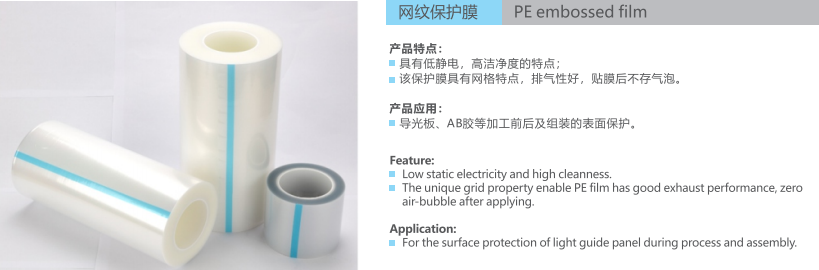
The global protective film industry is undergoing a structural reappraisal in 2026. As protective films move from line-side consumables to functional layers that influence yield, process stability and end-product quality, Adhesive Protective Film, Glass Protective Film, PE protive film, Self Adhesive Film and Protective Film for Acrylic Sheet are no longer separate product categories but interconnected routes toward the same goal: reliable protection with clean, predictable removal.
Market growth masks a shift in value
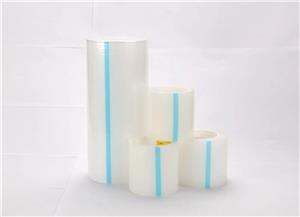
The total market continues to expand. MarketsandMarkets estimates the global protective film market at US$5.81 billion in 2026, rising to US$7.62 billion by 2031, a CAGR of 5.6%. But the more important signal is structural. Pressure-sensitive adhesive films are forecast to grow at 5.8% CAGR, while PE-based materials retain a leading share by value. This suggests that the precision bonding control represented by Adhesive Protective Film and the cost-performance balance carried by PE protive film are serving different parts of the same demand map rather than replacing each other.
The AB-type adhesive protective film segment is particularly notable. Estimated at US$1.25 billion in 2026, it is expected to reach US$1.78 billion by 2032, a CAGR of 6.02%. AB adhesive technology has evolved from simple surface coverage into an integrated solution for temporary protection, clean peeling and multi-substrate compatibility. Its value is no longer just the film itself, but its systemic effect on downstream process yield.
Glass protective film moves from flat to curved surfaces
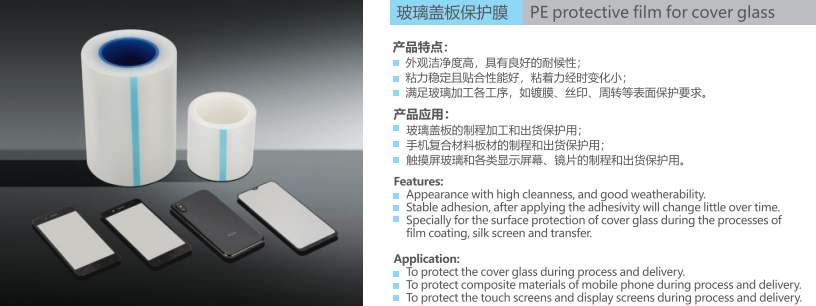
The technical frontier of Glass Protective Film is shifting. In May 2026, Whitestone Co., Ltd. was granted US patent US12617184B2, directed at curved glass protection for portable displays. The solution uses full-area bonding between a glass film component and an adhesive layer to address edge lifting and incomplete lamination that have long troubled curved display protection. Meanwhile, a Chinese patent application published in June 2026 takes a material-structure approach, building a metal coating, scratch-resistant layer and UV-resistant layer on both sides of a base film to address durability, thermal insulation and weather resistance simultaneously.
In the more specialized field of ITO glass, PSA protective film formulations are converging toward a narrow window of low peel voltage, high transmittance and stable medium adhesion. A patent published in May 2026 shows that by combining nano-SiO₂ and Al₂O₃ fillers, an anchoring agent and an antistatic agent in a silicone PSA layer, a protective film can minimize electrostatic risk during peeling while maintaining scratch resistance. For modern electronics manufacturing, the performance boundary of a glass protective film is now tied directly to the electrical integrity of downstream devices.
PE protective film: no residue and sustainability
The base of PE protive film remains large. The global PE protective film market was about US$1.808 billion in 2025 and is expected to reach US$2.252 billion by 2032. However, with general-grade products facing ample capacity and margin pressure, growth is concentrating in high-value segments such as low-residue, UV-resistant and cleanroom-grade products.
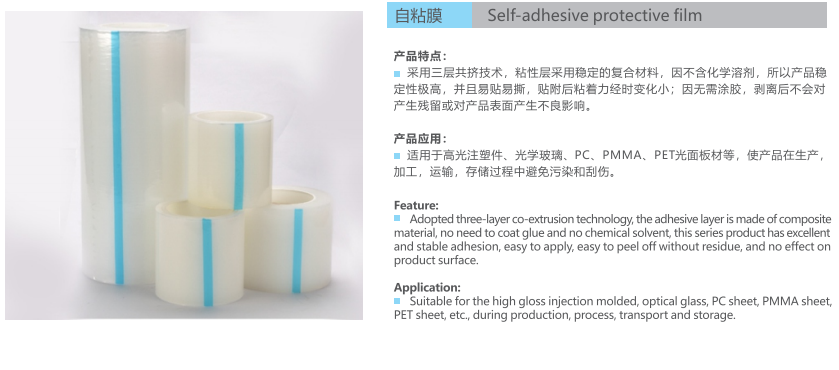
Technology routes are diverging. Pregis’ Phantom Mask technology integrates the adhesive layer directly into the polyethylene substrate through co-extrusion rather than traditional surface coating, reducing the risk of adhesive degradation and residue transfer over time or under environmental change. Another patent published in July 2026 uses a hot-press lamination process combining an LDPE film and a PET tape layer, targeting residue-free application and removal throughout automated attaching and peeling to meet green processing standards. The message is consistent: the competitiveness of PE protive film is shifting from “how well it sticks” to “how cleanly it leaves when removal is due.”
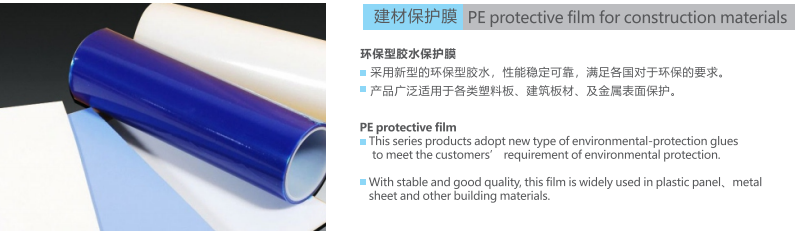
Self Adhesive Film and acrylic sheet protection: process compatibility becomes a hard metric
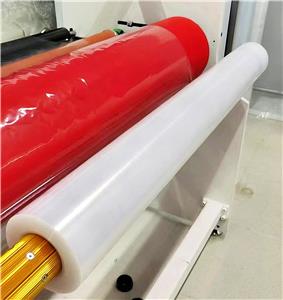
The value of Self Adhesive Film in plastic sheet protection lies in a precise balance between reliable adhesion and clean removal. For self-adhesive PE films used on acrylic, PVC and ABS substrates, products are emerging with high transparency—light transmittance above 91%—and electrostatic adsorption without adhesive residue, protecting against scratches and moisture without interfering with sheet inspection. Wider customization, from 500 mm to 2,000 mm, and improved cutting adaptability respond to practical demands for material utilization and changeover efficiency at the processing end.
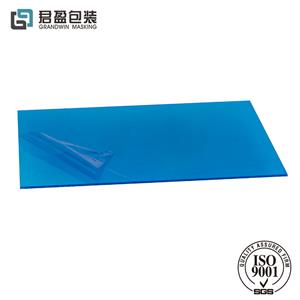
The segment for Protective Film for Acrylic Sheet places even stricter demands on this balance. The acrylic processing film and protective film market is projected to grow from about US$207 million in 2026 to US$295 million by 2032, a CAGR of 6.45%. Acrylic surface protective films must remain in place through cutting, thermoforming, bending, printing and even laser cutting, while still peeling cleanly without residue after processing. Product differentiation is no longer about “high or low tack” but about systematic matching to acrylic formulation, surface energy, processing temperature and removal timing.
Capital moves in the supply chain echo this trend. In March 2026, a BOE subsidiary and Japan’s Okura Industrial co-founded Hefei Jingcang New Materials Technology Co., Ltd. with registered capital of RMB 600 million, with core products explicitly aimed at acrylic protective film for polarizers in large-size display panels. In May 2026, Kaisimao’s Huizhou Shipai plant started operation, covering PET-based acrylic protective film, PE acrylic protective film and PE electrostatic protective film, among other categories. When panel giants and specialized film makers both increase their bets on acrylic protective film, the strategic weight of this segment is clear.
From “a sheet of film” to “a set of process parameters”
The most notable change in the 2026 protective film industry is not a single technical breakthrough but a shift in how performance is evaluated. The adhesion curve of Adhesive Protective Film, the curved-surface lamination precision of Glass Protective Film, the residue control of PE protive film, the cutting adaptability of Self Adhesive Film and the full-process stability of Protective Film for Acrylic Sheet are increasingly being incorporated by downstream manufacturers into procurement decisions directly linked to yield, efficiency and sustainability. Protective film is no longer a passive consumable attached to a surface, but a functional layer deeply embedded in process parameters and quality responsibility. For material suppliers, the competitive divide is equally clear: the ability to integrate adhesion science, substrate engineering and application know-how into reproducible, verifiable system solutions will determine their position in the next stage of the market.