Adhesive Protective Film, PE Protection Film and LDPE Release Liner
The past twelve months have brought a cluster of product-level developments across adhesive protective film, PE protection film and LDPE release liner—each aimed at a narrower set of performance criteria: residue-free removal, wider temperature windows, and liner behavior as a designed variable rather than a commodity input.
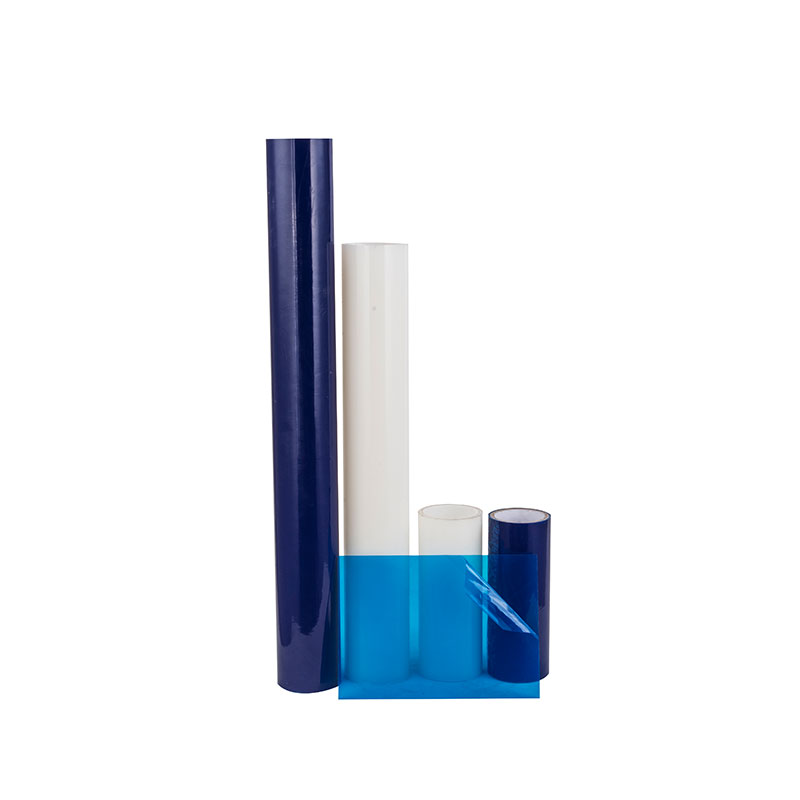
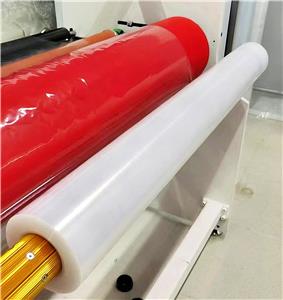
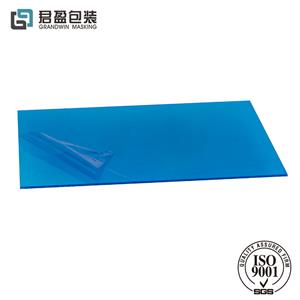
Grandwin’s PE Protective Film for Plastic Sheets ties LDPE release liner directly to peel performance. Grandwin Packaging Technology (Shunde, Guangdong) completed first mass shipments of a new PE Protective Film for Plastic Sheets and a companion acrylic sheet protective film in January 2026. The product uses a polydopamine-modified composite coating and a high-quality LDPE Release Liner; by optimizing the liner’s release performance and the substrate composite process, Grandwin cut tearing resistance by 30%, enabling one-handed peeling even at low temperatures. The adhesive is a cross-linked acrylate, and the film is rated for –30°C to 90°C without adhesive transfer or residue on removal. Surface hardness is 4H, and the film is specified to hold stable protection for more than 12 months under outdoor exposure. The significance is product-level: the LDPE release liner is positioned as the component that sets the peel feel and downstream handling window for a PE protective film aimed at PC/PMMA sheets in electronics, automotive lighting and architectural glazing.
Grandwin’s PE Self-Adhesive Film for Plastic Sheets removes the adhesive altogether. Shenzhen Guangdayuan Film released a PE self-adhesive film in February 2026 that uses static adsorption rather than a pressure-sensitive adhesive layer. The film cuts with ordinary scissors without cracking, adheres by static charge, and leaves no residue on removal because there is no adhesive to transfer. Transparency is above 91%, and the film is offered in customizable widths from 500 mm to 2,000 mm for PVC, acrylic and ABS sheets. Guangdayuan cites 72-hour sampling and five-day bulk delivery as supply-chain terms. For plastic-sheet converters, the product separates the “protection” function from the “adhesion” function—a meaningful product distinction where residue risk is the primary rejection criterion.
Toray launched a liner-free adhesive film that eliminates the release liner by design. Toray Industries introduced a liner-free adhesive film for fabric and textile applications in April 2026. Instead of a conventional release liner, the film carries micron-level surface protrusions that prevent unintended contact with fingers, metal and plastic, while allowing fibers from cloth and non-woven textiles to enter the gaps and reach the adhesive layer. Toray estimates a liner-free heat-patch design based on the film could reduce waste by about 247 metric tons per year and make warmers roughly 60% lighter and 38% thinner, excluding the heating element. The target is ¥1 billion in annual revenue by fiscal 2030, with applications spanning cooling sheets, disposable diapers, nursing pads and medical pads. The product is not a PE protective film, but it is a direct product-level challenge to the assumption that an LDPE release liner is always required in an adhesive-film construction.
Keyful introduced cellulose-based adhesive protective films with compostability claims. Keyful’s CP-AP is a cellulose acrylic adhesive protective film made from recycled wood pulp, carrying industrial and home composting certifications. The facestock is 28±3 μm bio-cellulose; the adhesive is a 12±2 μm acrylic with peel strength of 5–8 gf/25 mm and release force of 1–8 gf/24 mm, operating from –20°C to 80°C. The film is positioned for electronics screens, plastics, high-end hardware and appliance surfaces, with customizable adhesion and peel-force gradients to reduce rework in downstream assembly. A companion silicone-adhesive variant, CP-SAP, pairs the same bio-cellulose facestock with a silicone adhesive and a PET release liner, and is tested to 85°C/85% RH for high-temperature, high-humidity aging without yellowing or rebound. The product line matters because it extends the “residue-free” claim to a compostable substrate, rather than limiting sustainability to the adhesive or the liner.
RITIAN released a 0.05 mm blue PE Protection Film for aluminum composite panels, with residue-free removal as the headline claim. Shenzhen Ritian Technology launched the RH05010 model in June 2026, aimed at Southeast Asian metal fabricators. The product is a 60-micron PE film with a solvent-based adhesive, available in blue or clear, in widths from 20 mm to 1,240 mm and roll lengths from 50 m to 500 m. RITIAN specifies clean removal without sticky residue, weather resistance for tropical humidity and UV exposure, and RoHS compliance. Monthly capacity is 500,000 m², with pricing at US$0.23–0.39 per m² and two-color logo printing available for distributors. The product is a direct PE Protection Film launch in a metal-fabrication context where adhesive residue on aluminum composite panels is a scrapping risk, and the specification sheet is unusually concrete on width, length and price.
Hengrun Plastics added a coated flame-retardant adhesive film to its protective-film lineup. Hengrun introduced a Coated Flame Retardant Adhesive Film in January 2026, designed for industrial, electronic and transportation applications. The film is produced with precise lamination to deliver strong adhesion, thermal stability and mechanical strength across substrates; target uses include electronics insulation, automotive and transportation components, industrial laminates, and protective films or safety labels. Thickness, width, adhesive type and flame-retardant grade are customizable. As a product addition from an adhesive film supplier already active in PE protective films, it broadens the supplier’s offering into flame-retardant bonding rather than surface protection alone.
Shanzi New Materials will show its PE Protection Film line at ITWA@Vietnam in August 2026. Shanzi (Baoding) confirmed it will exhibit PE protective film, optical film and automotive film at Industrial Technology World Asia Vietnam, August 5–7, booth B80. The company runs a Class 5,000 cleanroom with annual PE capacity above 3,000 tons and positions its PE protective film for automotive lamps and components, LCD displays, mobile phone screens and computer casings, with easy application and removal as the core claim. The product itself is not new to the catalog, but the trade-show placement signals where PE protection film suppliers see near-term demand: electronics and automotive components in Southeast Asia.
Samsung SDI published a patent for an adhesive protective film aimed at flexible OLED polyimide substrates. US20260062594A1, published March 5, 2026, describes an adhesive protective film composed of a (meth)acrylic copolymer, a curing agent and an aromatic-group-containing (meth)acrylic monomer. The film is specified to deliver peel strength of at least 350 gf/inch at 60°C/93% RH, a storage modulus of 0.1 MPa or less at –20°C, and creep of 40% or less at 60°C, targeting the competing demands of temporary attachment during flexible OLED processing and clean, high-peel-strength removal on polyimide substrates. This is a formulation-level product development for Adhesive Protective Film in the display segment, where peel-strength variability on polyimide has been a yield issue.
Read together, the product news points to three specific shifts. Residue-free removal has moved from a marketing phrase to a specification line: Grandwin quantifies it as no adhesive transfer after long-term use across –30°C to 90°C; Guangdayuan removes the adhesive entirely; RITIAN leads with “zero residue” on a solvent-based PE film for metal panels. The LDPE release liner is being designed as a performance variable, not a purchased commodity—Grandwin attributes a 30% peel-force reduction to liner optimization. And suppliers are differentiating on substrate and construction rather than on thickness alone: cellulose compostable facestocks from Keyful, a liner-free construction from Toray, and flame-retardant adhesive films from Hengrun all sit alongside conventional PE protective films in the same supplier landscape.